
If your cat pees on bamboo flooring, the goal is not only to clean the visible mess. The real goal is to remove the urine, reduce the odor, and protect the bamboo finish at the same time. At Carecon™, we see this as a practical pet-care problem. You need a method that works fast, uses very little moisture, and does not damage the floor while you are trying to save it. Bamboo flooring care guides consistently say to soak up spills right away and avoid excessive water, wet mops, or steam, because too much moisture can dull the finish or damage the floor over time.
Cat urine is harder than a normal spill because it is not just water. It leaves odor-causing compounds behind, and if it gets into seams or under the finish, the smell can come back later. PetMD says enzyme-based cleaners are usually the most effective option because they break down the acid in cat urine, rather than only covering the smell. That is why a floor-safe, low-moisture cleanup is usually the best first response on bamboo.
에서 린이 케어콘 수입 및 수출 유한공사., we would explain it this way: move quickly, keep the floor as dry as possible, use the right cleaner, and dry the area fully when you finish. That simple sequence matters more than aggressive scrubbing or soaking the spot with random household products.
Why Cat Pee Is Tricky On Bamboo Flooring
Bamboo flooring may look tough, but it still needs careful cleaning. Multiple bamboo floor care guides say spills should be soaked up immediately with a dry towel or dry mop, and they warn against standing water, wet mops, and steam mops. That matters because cat urine can reach small gaps, sit on the finish, or seep into edges if it is left too long. Once that happens, odor removal gets harder.
The other issue is cleaner choice. This is where people often make the wrong move. Some pet-cleaning advice mentions vinegar as an odor helper, and PetMD includes vinegar among products that can help neutralize cat pee smell. But several bamboo flooring care guides from major flooring brands say not to use acidic materials such as vinegar on bamboo or engineered bamboo floors. That means the safest general advice is not to treat vinegar as the default answer on bamboo, especially if you do not know the exact finish on the floor.
This is why our Carecon™ recommendation is conservative. For bamboo flooring, start with absorbent towels, a pet-safe enzyme cleaner that is used carefully, and then a bamboo-safe or hardwood-safe low-moisture wipe-down if needed. That approach fits both the odor-removal side and the floor-care side.
What To Do Right Away
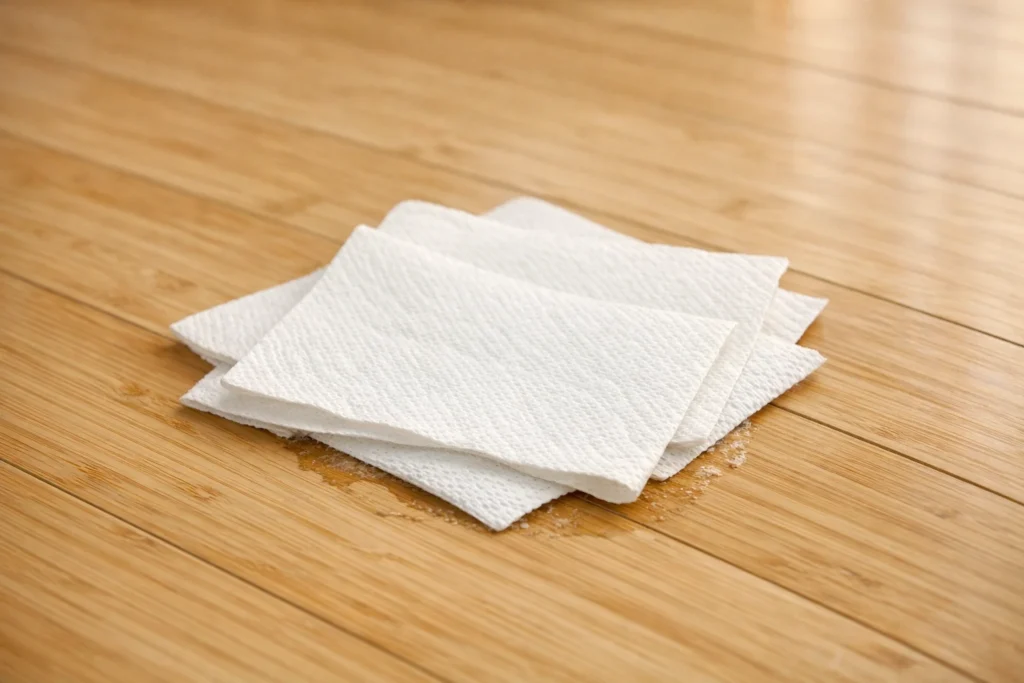
The first step is to soak up as much urine as possible. Use dry paper towels, a clean cloth, or a dry microfiber towel. Press down to absorb the liquid. Do not flood the area with water. Bamboo care guides repeatedly say to soak up spills immediately and avoid excessive moisture on the floor.
The second step is to stop the urine from spreading. If the puddle is fresh, keep your wiping motion controlled and small. The goal is to lift liquid off the floor, not push it farther toward seams or board edges. Flooring care instructions do not usually phrase it that way, but their repeated warning against excess moisture and spread makes the logic clear.
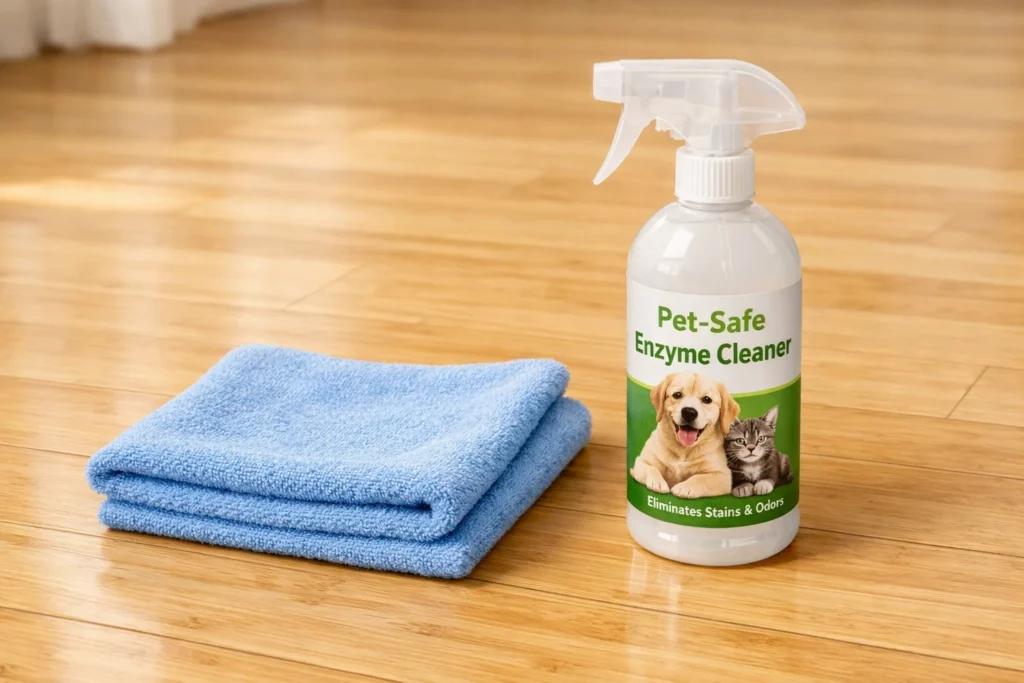
The third step is to use an enzyme cleaner made for pet urine. PetMD says enzyme cleaners are usually the most effective because they break down the acid in cat urine. The Spruce also says the best product for cat urine on wood floors is an enzyme cleaner, because other products may only cover the smell for a while. On bamboo, the key is to use enough cleaner to treat the spot, but not so much that the floor stays wet.
A Safe Step-By-Step Method For Bamboo Flooring
Start by removing surface liquid with dry towels. Keep replacing the towel until little or no moisture transfers. This is the best way to reduce how much urine can move deeper into the floor. Flooring care guides from Lowes-linked bamboo products and other manufacturers all point to the same idea: the faster you remove liquid, the less chance it has to affect the finish or the board edges.
Next, apply a small amount of enzyme cleaner to a cloth or directly to the affected area only if the product label allows it. PetMD says enzymatic cleaners break down the compounds in cat urine. The Spruce’s wood-floor cleanup method also notes that some enzyme removers need time to sit before you wipe them away. Follow the label, but do not let the liquid pool on the bamboo.
After the cleaner has had enough contact time, wipe the area with a clean cloth. If the product instructions call for a light rinse, keep it very light. The Spruce recommends only a light rinse and specifically says to avoid pooling water on wood. Bamboo floor care guides say the same thing in broader terms: use very little moisture and dry the area quickly.
Then dry the area fully with a clean microfiber towel. Do not leave the floor damp and walk away. Several bamboo floor care guides say moisture should evaporate quickly and should not sit on the surface. This step matters because even the right cleaner can cause trouble if it stays wet too long on bamboo.
If the smell is still there after the first pass, repeat the enzyme-cleaner treatment once the area is dry. Cat urine odor can linger because the odor compounds stay behind even after the visible stain is gone. PetMD says enzyme products are usually the most effective at removing all traces of cat urine odor, which is why one careful repeat is often better than switching to harsher chemicals.
What Not To Use On Bamboo Floors
Do not use a steam mop. Bamboo floor care guides are very clear on this. Steam and excess moisture can damage the floor or void warranty coverage, depending on the product.
Do not use ammonia-based cleaners. This point matters for two reasons. First, bamboo floor manufacturers often list ammonia-based cleaners among the products to avoid. Second, The Spruce says ammonia-based cleaners add to the problem when you are trying to remove cat urine odor from wood flooring. PetMD also says ammonia is one of the common cleaning ingredients that can be harmful to pets.
Do not use bleach, abrasive cleaners, wax-based products, or harsh solvents. Major bamboo flooring care guides warn against bleach, abrasive soaps, mineral spirits, paint thinner, acetone, and other harsh products because they can harm the finish. When the finish gets damaged, the floor becomes harder to protect the next time a spill happens.
Be careful with vinegar. PetMD lists vinegar as one possible odor helper for cat urine, and one bamboo-floor blog says a diluted vinegar mix can work if it is not overused. But several bamboo floor manufacturers say to avoid acidic materials such as vinegar on bamboo floors. Because of that conflict, the safer general rule is to avoid vinegar unless your specific floor maker says it is acceptable.
What To Do If The Smell Keeps Coming Back
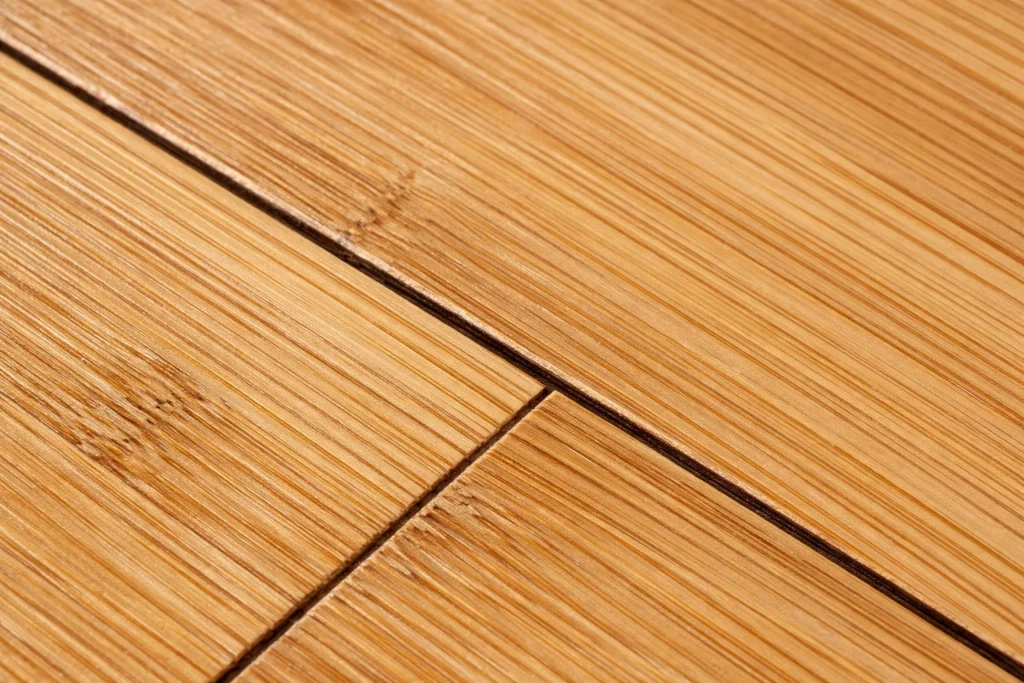
If the smell returns after careful cleaning, there is a good chance the urine reached deeper than the surface. The Spruce says that if wood flooring has gapped seams or a poor finish, urine and odor can sink into the seams or porous surface. In those cases, a surface wipe may not be enough.
This is where bamboo flooring becomes difficult. If urine has reached the seams, underlayment, or subfloor, the fix may move beyond cleaning and into repair. Flooring repair guidance from Ambient says urine stains can lead to odor issues that may require pulling up planks, treating the subfloor with an enzymatic odor eliminator, and replacing damaged boards, depending on the installation type.
You should also consider hidden spread. If you are not sure where the smell is coming from, a UV or black light urine detector can help locate urine areas that need cleanup. PetMD recommends this approach for finding urine spots when the odor source is unclear. While that source discusses dog urine, the detection logic applies to household pet urine stains more broadly.
At Carecon™, we would frame it in a simple way: if the odor is still strong after one or two careful enzyme-cleaning cycles and full drying, the problem may be below the surface, not on it. That is the point where floor repair becomes more realistic than endless re-cleaning.
How To Prevent Stains And Odor From Coming Back
Cleaning the floor is only half of the problem. If the cat keeps returning to the same spot, the smell may come back because new urine is being added before the area is fully resolved. PetMD says cats may urinate outside the litter box for several reasons, including medical issues, anxiety, or conflict with other pets. That means repeat accidents should not be treated as only a floor problem.
The litter box setup also matters. If the cat dislikes the box, the location, the litter type, or the cleanliness level, the same flooring spot may become the easier choice. PetMD’s guidance on inappropriate urination makes it clear that investigation is often needed, and in some cases a vet visit is part of the answer.
From a product and home-care point of view, prevention means three things. First, clean accidents quickly. Second, remove odor as fully as possible with the right cleaner. Third, address the reason the cat chose that spot in the first place. That combined approach is much more effective than only spraying fragrance over the area.
If you use mats near litter areas or feeding areas, make sure they do not trap moisture against the bamboo floor. Some flooring guides recommend breathable rug materials and warn against moisture entrapment. That is a useful detail because even prevention items can create a floor problem if they keep liquid against the surface for too long.
Our Carecon™ View
At Carecon™, we believe pet-care advice should work in real homes. When a cat pees on bamboo flooring, people usually make one of two mistakes. They either use too much water, or they use the wrong cleaner. Both mistakes can make the problem worse. The better method is much simpler: absorb fast, use a pet-safe enzyme cleaner, keep moisture low, and dry the area completely. That approach respects both the cat-odor problem and the bamboo-floor problem.
We also think honesty matters. Not every urine problem can be solved at surface level. If the urine reached floor seams or the subfloor, cleaning may reduce the smell but not fully remove it. In those cases, repair or board replacement may be the real answer. Flooring guidance for wood and bamboo-backed products supports that more serious view when damage has gone deeper than the finish layer.
결론
To get cat pee out of bamboo flooring, act fast and keep the floor as dry as possible. Absorb the urine right away with dry towels. Use an enzyme cleaner made for pet urine. Let it work as directed. Wipe the area clean. Dry it fully. Avoid steam, wet mops, ammonia, bleach, and other harsh or high-moisture methods. Be cautious with vinegar because pet-cleaning advice and bamboo-floor care advice do not fully agree on it, and many bamboo floor manufacturers say to avoid acidic cleaners.
If the smell keeps returning, the urine may have reached seams, underlayment, or the subfloor. At that point, repair may be more effective than repeated surface cleaning. For Carecon™, the best answer is the one that solves both sides of the problem: remove the odor, protect the floor, and reduce the chance of the cat coming back to the same place.